The mushroom season in the Var is closely linked to rainfall. Because of the Mediterranean climate, the first real flushes often appear after late summer rains.
- Spring: morels and fairy ring mushrooms show up in April–May.
- Early summer: by late May / June, chanterelles and summer porcini can be found.
- Summer: after thunderstorms, boletes sometimes appear from August onwards.
- Autumn: the peak season, September to November, with porcini, chanterelles, hedgehog mushrooms, horn of plenty, parasol mushrooms, etc.
- Late season: some species persist into early December, depending on temperature and humidity.
Common species in the Var
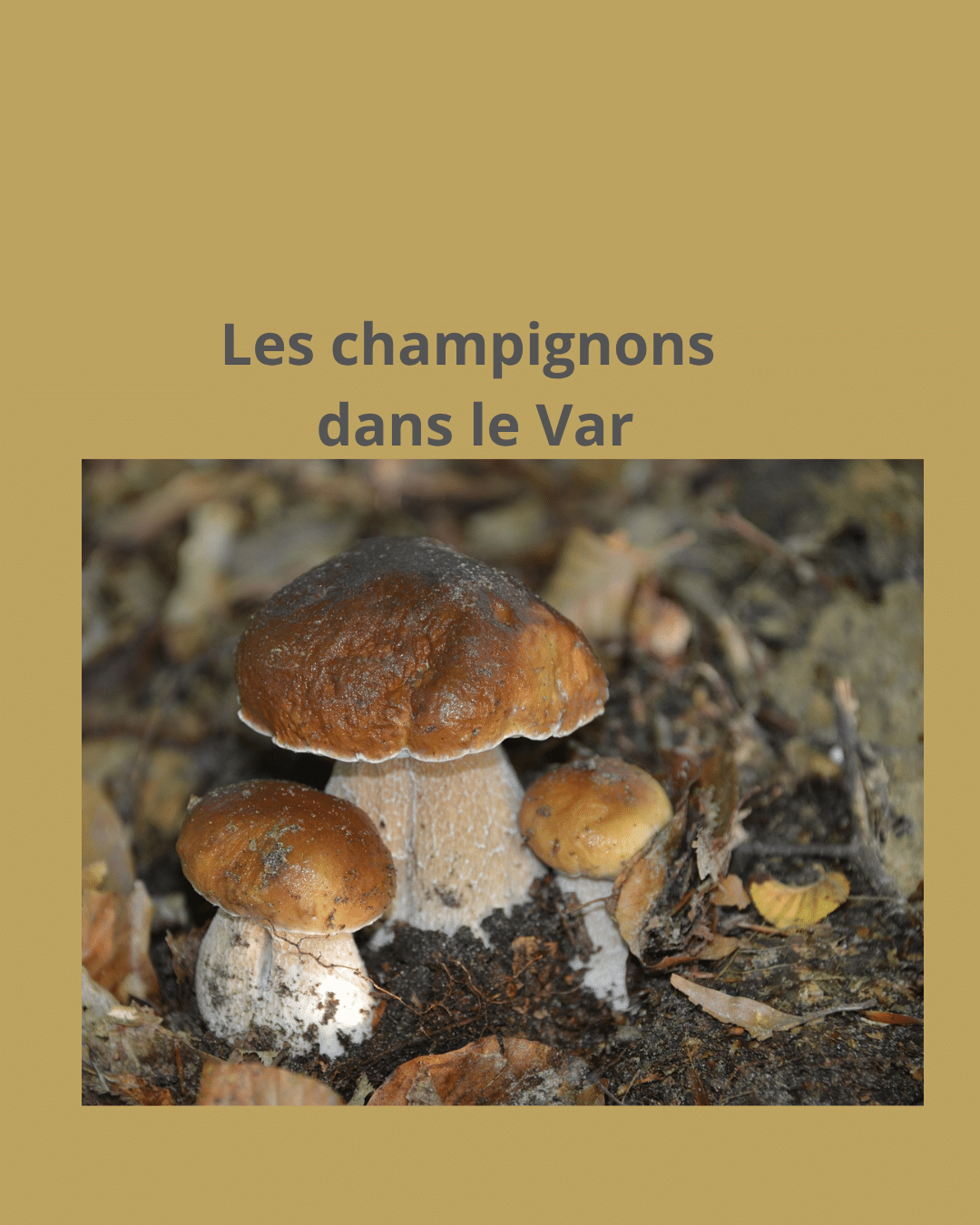
- Porcini (Boletus edulis) – highly prized, especially in autumn.
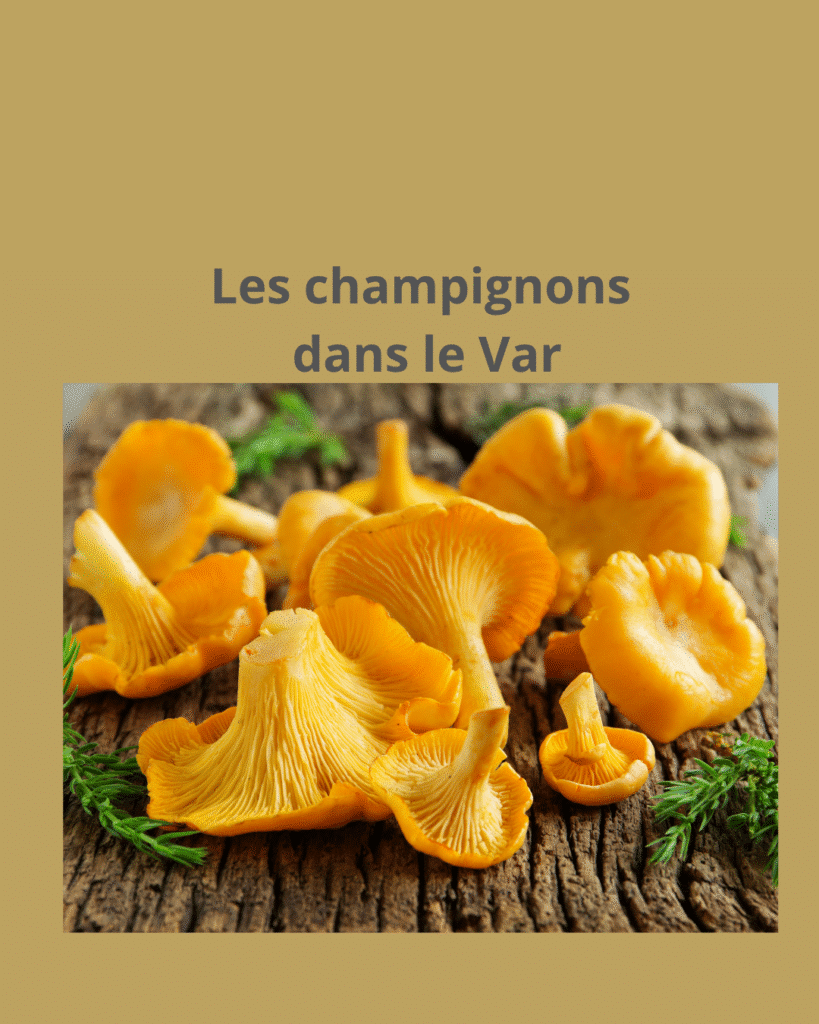
- Chanterelle (Cantharellus cibarius) – fragrant, present from summer through autumn.
- Hedgehog mushroom (Hydnum repandum) – easy to identify thanks to the spines under the cap.
- Horn of plenty (Craterellus cornucopioides) – black, appears later in the season.
- Caesar’s mushroom (Amanita caesarea) – excellent edible, but other amanitas are poisonous look-alikes.
- Saffron milk caps (Lactarius deliciosus, sanguifluus) – common in pine forests.
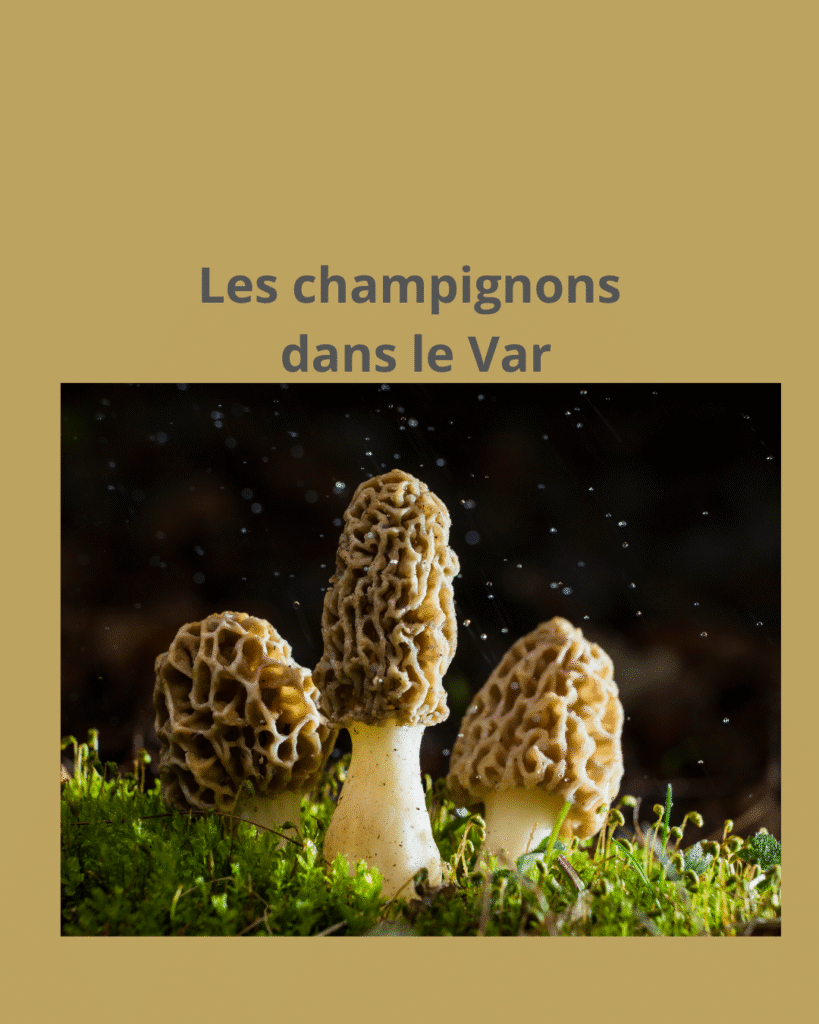
- Morels – typical of spring, favouring calcareous soils.
Safety and best practices
- Only pick mushrooms you can positively identify.
- On private land, you need permission; in public forests, picking for personal use is often tolerated but limited (around 5 litres per person per day).
- Cut mushrooms at the base with a knife instead of pulling them up, to protect the mycelium.
- Never overharvest – leave young and mature specimens to ensure regeneration.
- Be careful during hunting season and avoid straying too far from marked paths.
- Keep a few specimens of your harvest in case of poisoning, to help with identification.