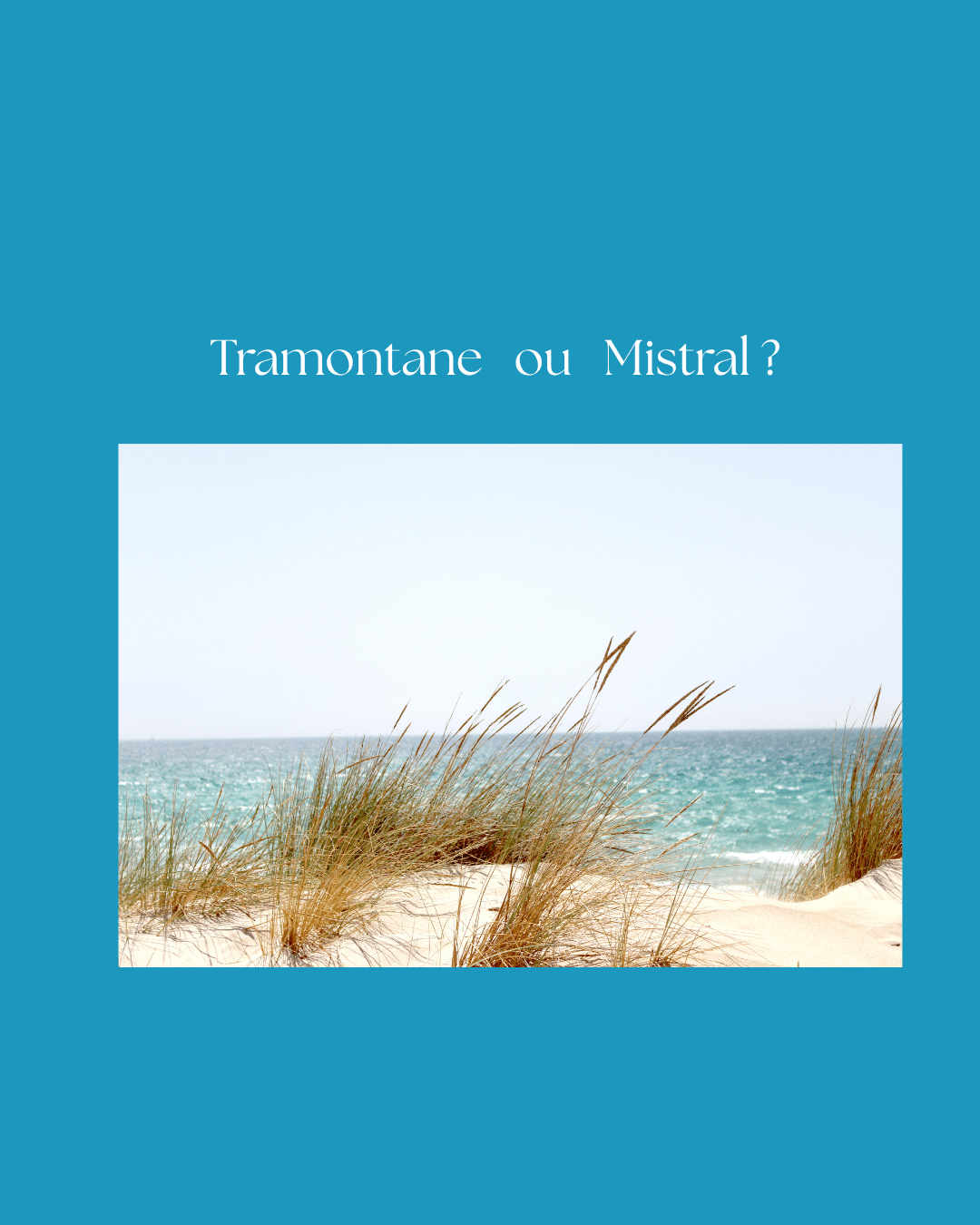
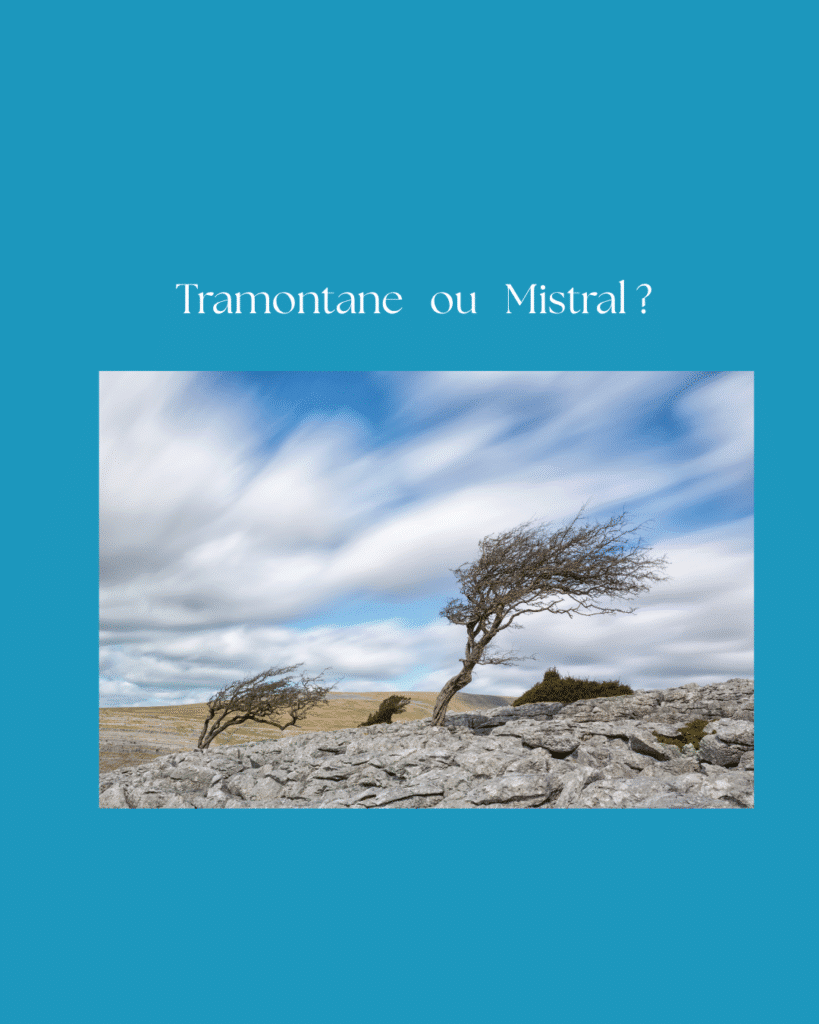
The tramontane and the mistral are two iconic winds in southern France. Both are cold, dry, and often strong—but they differ in direction, geography, and regional impact.
Origin and direction
- Mistral:
- Comes from the northwest.
- Blows through the Rhône Valley.
- Affects Provence: Avignon, Marseille, Arles, and the coast to Toulon.
- Tramontane:
- Comes from the north or northeast.
- Impacts Languedoc and Roussillon.
- Common around Perpignan, Narbonne, Carcassonne, and the Gulf of Lion.
Characteristics
| Feature | Mistral | Tramontane |
| Wind type | Cold, dry, and strong | Cold, dry, and strong |
| Average speed | 50–90 km/h (gusts > 100 km/h) | 40–80 km/h |
| Frequency | Very frequent (100+ days/year) | Also frequent, slightly less so |
| Duration | Can last several days | Can also persist for days |
Geographical origin
- Mistral: formed between the Alps and the Massif Central.
- Tramontane: shaped between the Pyrenees and the Massif Central.
Effects
- Often clear skies (dry air removes clouds).
- Increased wildfire risk in dry areas.
- Can make the sea dangerous (rough waves).
- Popular among windsurfers and kitesurfers.
In summary
The mistral blows through Provence and the Rhône Valley, while the tramontane affects the southwest. Both are cold, dry northern winds shaped by distinct mountain ranges.